
How many batteries do I need for a 400 watt solar panel?
A 400 watt solar panel can produce useful electricity for a home, shed, caravan, or small off-grid system. However, choosing the right battery size is just as important as choosing the panel itself. The correct battery depends on how much electricity you use, how long you need backup power, and how much sunlight your system receives.
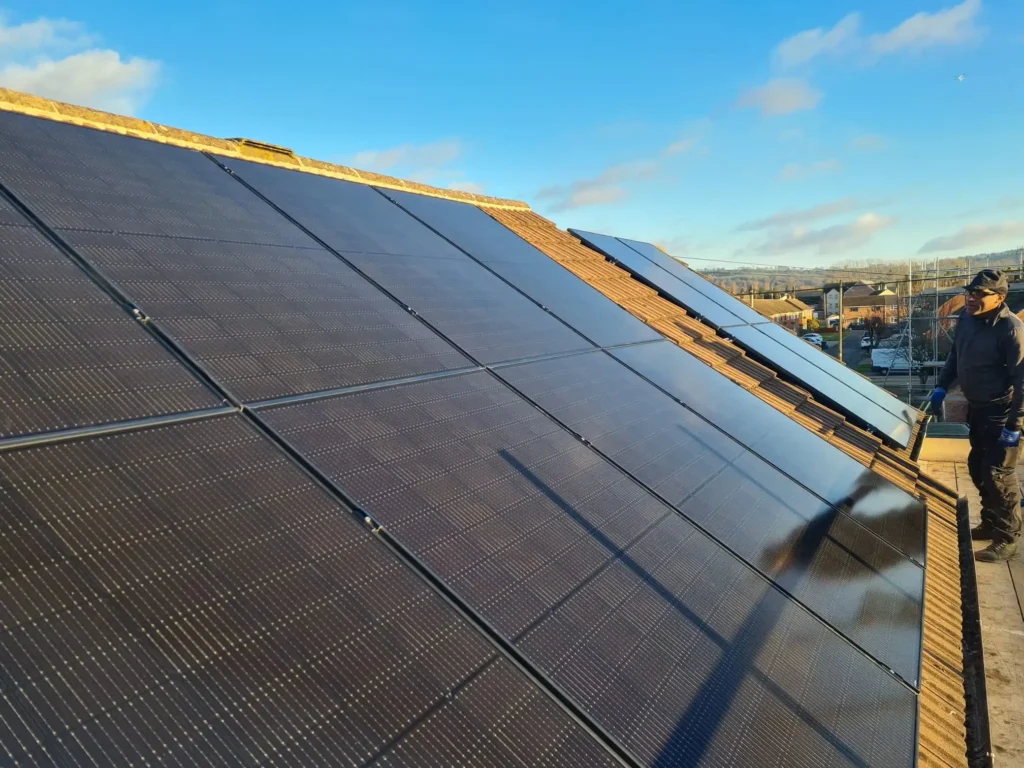
When planning solar panels for house systems, it is important to look at the whole setup rather than the panel wattage alone. A 400 watt panel can generate energy during daylight, while a battery stores extra power for later use.
This guide explains how many batteries you may need for a 400 watt solar panel. It also covers battery capacity, daily energy use, sunlight hours, battery types, and practical examples.
What Does a 400 Watt Solar Panel Produce?
A 400 watt solar panel has a maximum rated output of 400 watts under suitable test conditions. However, it will not normally produce 400 watts for every hour of the day.
For example, if the panel receives around four hours of useful sunlight in a day, a simple estimate would be:
400 watts × 4 hours = 1,600 watt-hours
That equals around 1.6 kWh of electricity before normal system losses are considered.
In real conditions, output can change due to clouds, shading, panel direction, temperature, dirt, and seasonal sunlight. Therefore, a 400 watt panel may produce less energy on some days and more on others.
For solar panels for house installations, these factors should always be considered before choosing a storage system.
How Much Battery Do You Need?
The number of batteries you need depends on the amount of energy you want to store.
A common way to calculate battery capacity is:
Battery capacity = daily energy use × desired backup time
For example, suppose you want to store 1.6 kWh from your 400 watt panel. A battery with around 2 kWh of usable storage could be suitable for storing a large part of this daily production.
However, battery capacity is not the only factor. You also need to consider the battery’s depth of discharge, efficiency, voltage, and recommended operating range.
A modern lithium battery can usually provide more usable capacity from its rated size than some older battery technologies. As a result, two batteries with the same stated capacity may not provide exactly the same usable energy.
How Many Batteries for a 400 Watt Solar Panel?
There is no single answer because battery requirements depend on your energy needs.
Here are some simple examples:
One 1 kWh Battery
A 1 kWh battery may be enough if you only want a small amount of backup storage.
It could help run small devices such as:
LED lights
A Wi-Fi router
Small electronics
Phone chargers
Small fans
However, it may not provide enough stored energy for larger household appliances for long periods.
One 2 kWh Battery
A 2 kWh battery provides more storage and may be a better match for a 400 watt panel in a small system.
It could store a significant portion of the energy generated during a good sunny day. The exact result will depend on how much electricity the panel produces and how much energy the battery can accept.
Two 2 kWh Batteries
Two 2 kWh batteries provide around 4 kWh of rated storage.
This setup may suit someone who wants longer backup time. Nevertheless, a 400 watt panel may not produce enough daily energy to fully charge 4 kWh of storage every day.
That is an important point.
A larger battery does not automatically mean a better system. If the solar array is too small, the battery may remain partly charged.
Why Battery Size Must Match Solar Generation
A solar system works best when the panel capacity and battery storage are balanced.
Imagine that your 400 watt solar panel produces about 1.6 kWh on a good day. Installing a 10 kWh battery would give you plenty of storage space. However, the panel would not have enough daily generation to fill that battery from empty.
Therefore, a large battery can make sense when you have more solar panels, higher energy production, or another charging source.
For solar panels for house projects, installers normally consider the property’s electricity use, roof space, solar generation, battery storage and future energy needs together.
What Appliances Can a 400 Watt Panel Support?
A 400 watt panel can contribute to many everyday electrical needs. However, the panel output changes throughout the day.
For example, a 400 watt panel could help provide electricity for:
LED lighting
Broadband equipment
Small televisions
Laptop charging
Phone charging
Small refrigeration loads
Low-power fans
Other small electrical devices
Large appliances need more energy.
An electric kettle, tumble dryer, electric shower, oven, or immersion heater can use much more power than a 400 watt panel can provide at one time.
So, if you want to power several large appliances, you may need a larger solar array and a larger battery system.
Battery Voltage Also Matters
Battery capacity is often shown in kilowatt-hours, but smaller batteries may also be described using volts and amp-hours.
For example:
12V × 100Ah = 1,200Wh
That equals approximately 1.2 kWh of nominal capacity.
However, you should not assume that all 1.2 kWh can always be used. Battery chemistry and the recommended depth of discharge affect the usable amount.
A professional design should also account for inverter losses and other electrical losses.
This becomes especially important when planning solar panels for house systems because the battery must work safely with the inverter and solar charge equipment.
Lithium Batteries for Solar Storage
Lithium batteries are widely used in modern solar energy systems because they offer several useful features.
They can provide:
High usable capacity
Good charging efficiency
Long service life
Compact installation
Stable performance
Good daily cycling ability
Lithium iron phosphate, often called LiFePO4, is another popular battery chemistry for energy storage.
A suitable battery can help store surplus solar electricity during the day and make that electricity available later.
Even so, battery selection should be based on the complete system rather than capacity alone.
What About Lead-Acid Batteries?
Lead-acid batteries have also been used in solar systems for many years.
They can have a lower initial cost, but they are often heavier and may require more capacity to provide the same practical usable energy as a modern lithium system.
For small off-grid systems, lead-acid batteries may still have a place. However, lithium technology is often preferred where regular cycling, space and long-term performance matter.
How Much Sunlight Does a 400 Watt Panel Need?
Solar panels generate electricity when light reaches their cells. Strong direct sunlight usually provides better output than weak or heavily shaded light.
A panel’s daily production can therefore change from one day to another.
For example:
400W × 3 peak sun hours = 1.2 kWh
While:
400W × 5 peak sun hours = 2.0 kWh
These are simple estimates, not guaranteed production figures.
Weather, roof direction, roof angle, shading and temperature all have an effect.
For a property in the UK, seasonal differences are also important. Summer can provide much more solar generation than winter.
This is why solar panel Nottingham projects, for example, should be assessed using local conditions and the property’s actual requirements.
Should You Install More Than One Solar Panel?
If your goal is to charge a larger battery, one 400 watt panel may not be enough.
For example, four 400 watt panels provide a total rated capacity of:
400W × 4 = 1,600W
That gives the system 1.6 kW of solar capacity.
A larger solar array can charge a bigger battery more effectively, provided the inverter, charge controller and other equipment are correctly sized.
This approach is often more practical for homes that have higher electricity use.
When comparing solar panels for house systems, it is therefore better to consider the complete energy system instead of focusing only on the wattage of one panel.
What Is the Best Battery Size?
For a single 400 watt solar panel, a battery around 1 to 2 kWh can be a reasonable starting point for a small storage system.
However, this is not a universal recommendation.
A larger battery may be suitable if:
You have several solar panels.
You use more electricity at night.
You want longer backup.
You have another charging source.
You plan to expand the solar system.
Your daily energy use is high.
On the other hand, a smaller battery may be better when your electricity needs are low.
The right size should always be based on actual energy consumption.
How to Calculate Your Battery Requirement
You can use a simple three-step method.
Step 1: Find Your Daily Electricity Use
Look at your electricity bills or smart meter data.
Suppose you use 6 kWh per day.
Step 2: Decide How Much You Want to Store
You may only want to store electricity for evening use.
For example, perhaps you need 3 kWh after the sun goes down.
Step 3: Allow for Battery Losses
A battery system does not deliver every unit of stored electricity perfectly. Charging and discharging create some losses.
Therefore, the battery may need a little more rated capacity than the amount of energy you want to use.
A professional installer can calculate this more accurately.
Choosing the Right Solar System for a Home
A home solar system usually includes several important components.
These can include:
Solar panels
Inverter
Battery
Mounting equipment
Electrical protection
Monitoring equipment
Cabling
Metering equipment
A good system keeps these components balanced.
A trusted solar panel installer Edan Power with excellent customer support can help homeowners understand their options and select a system based on their property and energy needs.
You can learn more about solar panel solutions and installation services.
You can also explore solar panels for wider information about home solar systems.
For commercial requirements, solar panels birmingham services can provide another option for businesses looking to reduce grid electricity use.
Solar, Energy and Battery Storage
The basic idea behind a solar system is simple.
Solar technology captures energy from sunlight. A solar panel converts sunlight into electrical power. An inverter can then convert the electricity into a form that household appliances can use.
Extra energy can be stored in a battery.
Later, the stored electricity can be used when the panels are not producing enough power.
This can help reduce reliance on grid electricity and make better use of solar generation.
FAQs
1. Can one 400 watt solar panel charge a battery?
Yes. A 400 watt panel can charge a compatible battery when sufficient sunlight is available. The charging speed depends on sunlight, battery capacity, charge equipment and system losses.
2. What size battery is best for a 400 watt solar panel?
A battery around 1 to 2 kWh can be suitable for a small system. However, the correct size depends on your electricity use and daily solar generation.
3. Can a 400 watt solar panel power a house?
One 400 watt panel is unlikely to power an entire house on its own. It can contribute useful electricity, but most homes need several panels to meet normal household demand.
4. How many 400 watt panels do I need for a home?
The number depends on your annual electricity consumption, roof space, available sunlight and desired energy output. A professional solar assessment can provide a more accurate figure.
5. Can I add more batteries later?
Many systems can be expanded, but compatibility matters. The inverter, battery model and system design must support additional storage.
6. Does a bigger battery always give better results?
No. A large battery needs enough energy to charge it. If the solar array is too small, much of the battery capacity may remain unused.
7. Is lithium better than lead-acid for solar?
Lithium batteries often offer better usable capacity, efficiency and cycle performance. However, the best option depends on the system, budget and intended use.
8. Can I use a battery at night?
Yes. A charged battery can supply stored electricity when the solar panels are not generating enough power, subject to the system’s design and available capacity.
Conclusion
A 400 watt solar panel can be useful for small solar energy systems, but the right battery size depends on much more than panel wattage. In many small setups, around 1 to 2 kWh of battery storage can be a practical starting point. However, your electricity use, sunlight, battery type, inverter and future plans should all be considered.
For larger homes, more solar panels and greater battery capacity may be needed. Therefore, the best approach is to match your storage with the amount of electricity your system can realistically generate and your household actually uses.
When planning solar panels for house installations, a balanced design can provide better value and more reliable performance. Whether you are considering a small setup or a larger home system, careful planning helps ensure that your solar panel and battery work together efficiently.
Ultimately, the number of batteries you need should be based on your energy goals rather than the 400 watt rating alone.