
What Factors Affect How Much Energy 12 Solar Panels Produce Per Day?
Twelve solar panels can produce a good amount of clean energy for a UK home. However, the daily output can change from one day to another. This is because solar panels depend on sunlight, weather, panel size, roof position, and several other factors.
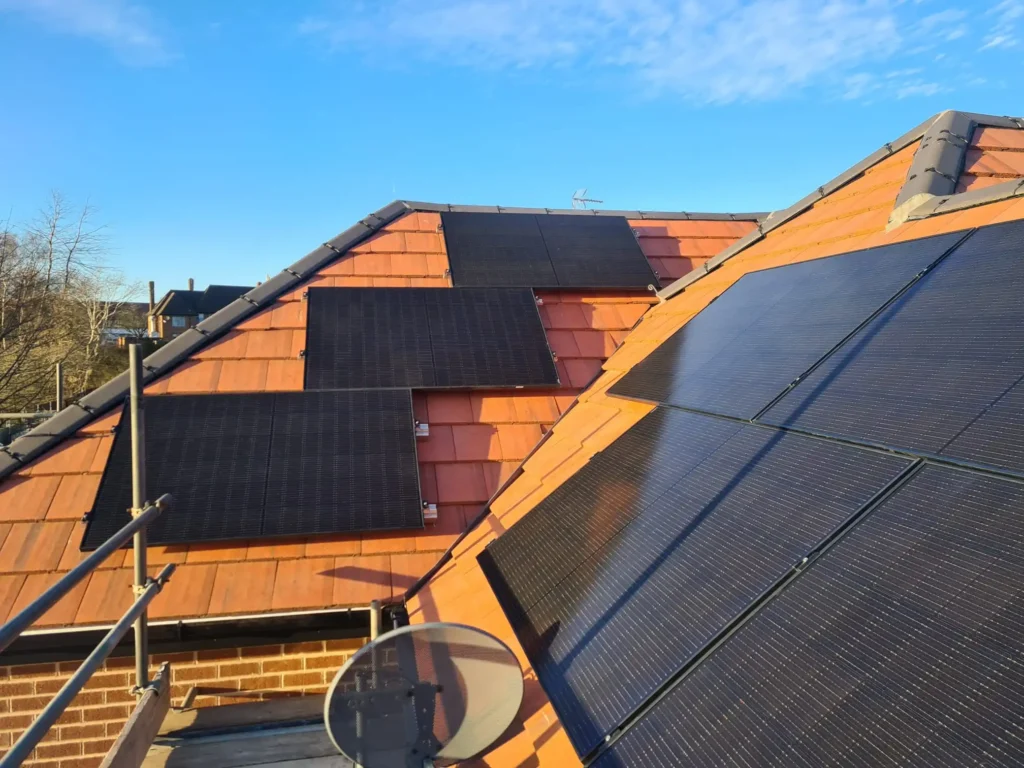
For homeowners, knowing these factors can help set realistic energy goals.
It can also make it easier to choose the right system and installer. If you are comparing the best solar panel installers uk, it is useful to ask how they estimate your yearly and daily solar output.
A typical 12-panel system may have panels rated at 400W each. This gives a total system size of 4.8kWp. In a suitable UK location, such a system can produce several thousand kilowatt-hours (kWh) of electricity each year. However, daily production may be much higher in summer than in winter.
So, what affects the amount of energy your 12 solar panels produce? Let us look at the main factors.
1. Panel Wattage
The power rating of each solar panel is one of the first things to consider.
For example, imagine you have 12 panels rated at 400W each.
12 × 400W = 4,800W
This means the system has a capacity of 4.8kWp.
If you use 450W panels instead, the total capacity becomes:
12 × 450W = 5,400W
Therefore, 12 higher-power panels can produce more electricity than 12 lower-power panels when other conditions are similar.
Still, panel wattage does not tell you exactly how much electricity the system will make each day. Real output depends on the sunlight that reaches the panels.
When comparing the best solar panel installers uk, ask them to explain both the panel rating and the expected real-world output.
2. Amount of Sunlight
Sunlight is perhaps the most important factor.
Solar panels need light to generate electricity. More useful sunlight usually means more energy production. On a bright summer day, your system may generate a large amount of electricity.
On a dark winter day, output can fall sharply.
The UK does not receive the same amount of sunlight throughout the year. Summer days are longer, while winter days are shorter. Therefore, a 12-panel system can produce very different amounts of energy across the seasons.
For example, a system may produce a strong amount of electricity during a clear June day but much less during a cloudy December day.
This seasonal change is normal. It does not mean that the panels are faulty.
3. Roof Direction
The direction of your roof can also affect solar output.
In the UK, south-facing roofs are often very suitable because they can receive strong sunlight for much of the day. However, east-facing and west-facing roofs can also work well.
An east-facing roof tends to receive more sunlight in the morning. A west-facing roof usually gets more sunlight later in the day.
North-facing roofs can produce less energy in many cases, although the exact result depends on the roof angle, location, shading, and system design.
A professional installer should assess your roof before giving an accurate production estimate. The best solar panel installers uk will consider roof direction instead of using the same estimate for every property.
4. Roof Angle
The angle of your roof can also influence how much sunlight reaches the panels.
Solar panels work best when they receive sunlight at a useful angle. However, there is no single perfect roof angle for every UK home.
A pitched roof may already have a suitable angle, so panels can often be installed without major changes.
Flat roofs are different. Panels may need mounting frames that give them a better angle.
A good installation company will consider the roof structure, panel position, local conditions, and available space before designing the system.
5. Shading
Shading can have a major effect on solar generation.
Trees, chimneys, nearby buildings, roof structures, and other objects can block sunlight. Even partial shade can reduce the output of affected panels.
For this reason, installers should check the roof at different times of the day.
A tree may not create much shade in the morning but could cover part of the roof in the afternoon. Likewise, a nearby building may cast a shadow during certain seasons.
If your home has shading issues, ask the best solar panel installers uk to explain how they will reduce the impact.
They may consider panel placement, optimisers, microinverters, or other system designs where suitable.
6. Weather Conditions
UK weather can change quickly. Therefore, daily solar output can change too.
Clouds reduce the amount of direct sunlight reaching the panels. However, solar panels can still generate electricity on cloudy days because some light passes through the clouds.
Rain itself does not stop solar panels from working. In fact, rain can sometimes help clean dust from the panel surface.
Still, heavy cloud cover normally means lower production.
Clear skies usually provide better conditions. As a result, the same 12-panel system may produce very different amounts on two days in the same month.
7. Temperature
It may seem logical that hotter weather always helps solar panels. However, that is not quite true.
Solar panels need sunlight, but very high panel temperatures can reduce their efficiency.
This means a cool, sunny day can sometimes provide better panel performance than an extremely hot, sunny day.
The panel temperature is also affected by airflow, roof type, installation method, and weather conditions.
Modern solar panels are designed to work across a wide range of temperatures. Therefore, you do not need to worry about normal summer heat. Instead, focus on good system design and proper installation.
8. Panel Efficiency
Panel efficiency shows how well a panel converts sunlight into electricity.
A higher-efficiency panel can produce more electricity from the same roof area when other conditions are equal.
This can be useful when your roof has limited space.
For example, two homes may have the same roof area but use different panels. The home with higher-output panels may be able to install more generation capacity within the available space.
However, efficiency is only one part of the decision. Price, warranty, durability, panel quality, inverter performance, and installation quality also matter.
That is why it is helpful to compare the full system rather than choosing a panel based only on its efficiency number.
9. Panel Age and Degradation
Solar panels are built to last for many years. However, their output can slowly decrease over time.
This process is known as degradation.
A good-quality panel normally loses only a small amount of its performance each year. Therefore, an older system may produce slightly less energy than it did when it was first installed.
This does not mean that old panels suddenly stop working.
Instead, their maximum output slowly declines. Panel manufacturers usually provide performance warranties that explain the expected output after a set number of years.
When comparing the best solar panel installers uk, check the panel performance warranty as well as the product warranty.
10. Dirt and Dust
Solar panels are exposed to the outside environment. As a result, dust, leaves, bird droppings, and other dirt can collect on the surface.
A small amount of dirt may have little effect. However, heavy dirt or large objects covering the panel can reduce the amount of sunlight reaching the solar cells.
Rain can naturally remove some dirt. Yet, panels may still need cleaning in certain locations.
For most homes, regular visual checks are useful. If the panels look heavily dirty, professional cleaning may help.
Do not climb onto your roof to clean panels yourself. Roof work can be dangerous.
11. Inverter Performance
The inverter is another important part of a solar system.
Solar panels produce direct current (DC) electricity. Most homes use alternating current (AC). The inverter converts the electricity into a form that household appliances can use.
A good inverter can help the system operate efficiently.
The inverter also manages the flow of solar electricity and may provide useful monitoring information. This lets homeowners see how much energy the system produces.
If the inverter develops a fault, solar generation can be affected even when the panels themselves are working correctly.
12. System Losses
Not all electricity produced by the solar panels reaches your appliances.
Some energy can be lost through cables, the inverter, connections, and other system components.
These losses are normal in solar systems.
Professional system design helps keep unnecessary losses low. Cable lengths, inverter sizing, panel layout, and electrical design can all matter.
Therefore, a good installer should provide an expected energy figure based on real system conditions rather than simply multiplying the panel wattage by the number of daylight hours.
13. Location in the UK
Where your home is located can also affect solar generation.
Some parts of the UK receive more solar energy than others. Local weather patterns, sunlight levels, roof position, and shading all play a role.
For example, a 12-panel system in one region may produce more annual electricity than an identical system elsewhere.
However, solar panels can still work very well across the UK.
If you are considering solar, ask the best solar panel installers uk to provide a location-based generation estimate. This will give you a better idea of what your system may produce.
14. Time of Day
Solar production changes throughout the day.
Generation usually starts after sunrise. It increases as the sun becomes stronger, then reaches its highest levels around the brighter part of the day. After that, production falls as the sun moves toward the horizon.
Therefore, your 12 panels will not produce the same amount of electricity every hour.
This is important when planning home energy use.
For example, running a washing machine or dishwasher during periods of strong solar generation can help you use more of your own electricity.
15. Seasonal Changes
Seasonal changes have a major effect on daily output.
Summer usually brings longer days and more sunlight. Therefore, solar generation can be much higher.
Winter has shorter days and lower sunlight levels. Cloudy weather can reduce output even further.
Spring and autumn often sit between these two extremes.
Because of this, it is better to judge solar performance over a full year rather than looking at only one day.
A single cloudy day does not tell you whether your system is performing well.
How Much Energy Can 12 Solar Panels Produce?
The exact amount depends on the panel rating and site conditions.
For example, 12 panels rated at 400W create a 4.8kWp system.
A UK system of this size may generate roughly 4,000–5,000kWh per year under suitable conditions, although actual results can be lower or higher.
Daily output can vary widely.
On a bright summer day, generation may be strong. On a short, cloudy winter day, production may be much lower.
Therefore, it is better to use annual estimates when judging the overall value of your solar system.
A professional quote from the best solar panel installers uk should show expected yearly generation and explain the assumptions behind the calculation.
How Can You Get More Energy From 12 Solar Panels?
You cannot control the weather, but you can improve the conditions around your solar system.
Here are some useful steps:
Keep panels free from heavy dirt and debris.
Reduce avoidable shading where possible.
Choose suitable panel placement.
Use a correctly sized inverter.
Monitor system performance.
Use high-quality equipment.
Choose a qualified installation company.
Check your system if generation suddenly falls.
Use more solar electricity during daylight hours.
Consider battery storage if it suits your energy needs.
Most importantly, use a professional installer who can assess your property properly.
The best solar panel installers uk should explain expected generation in simple terms. They should also discuss roof direction, shading, panel performance, inverter choice, and estimated yearly output.
Why Professional Solar Design Matters
A 12-panel system may look simple, but many details affect its performance.
Two homes can have the same number of panels and still produce different amounts of electricity.
One home may have a clear south-facing roof. Another may have trees, a different roof angle, or more shade.
That is why professional design matters.
The best solar panel installers uk will assess your roof before recommending a system. They can also estimate annual generation based on your location and property.
This gives you a more realistic idea of how much electricity your system can produce.
Frequently Asked Questions
How much electricity do 12 solar panels produce per day?
It depends on panel power, sunlight, weather, roof direction, shading, and location. A 12-panel system can produce several kWh on a weaker day and much more on a bright summer day.
Are 12 solar panels enough for a home?
They can be enough for some homes, especially where electricity use is moderate. However, homes with high energy use may need more panels or battery storage.
Do solar panels work on cloudy days?
Yes. Solar panels can still generate electricity when the sky is cloudy. However, output is normally lower because less sunlight reaches the panels.
Which roof direction is best for solar panels in the UK?
South-facing roofs are often very suitable. East and west-facing roofs can also provide good results. The best option depends on your property and energy use.
Does rain affect solar panel output?
Rain often comes with clouds, so production may fall because less sunlight reaches the panels. However, rain itself does not stop solar panels from generating electricity.
Do solar panels produce electricity in winter?
Yes. Solar panels work during winter, but shorter days, lower sun levels, and cloudy weather can reduce production.
Can shade reduce solar panel production?
Yes. Shade can reduce the output of affected panels. Trees, chimneys, buildings, and other objects should be considered during system design.
How long do solar panels last?
Good-quality solar panels can operate for several decades. Their output slowly declines over time, so checking the manufacturer’s performance warranty is important.
Should I use a battery with 12 solar panels?
A battery can help store surplus solar electricity for later use. It may be useful if your home uses more electricity in the evening than during the day. However, the right battery size depends on your energy use and solar generation.
How should I choose an installer?
Compare experience, qualifications, warranties, equipment quality, system design, customer reviews, and the expected energy output. The best solar panel installers uk should give you clear information without making unrealistic generation promises.
Final Thoughts
The amount of energy produced by 12 solar panels depends on much more than the number of panels.
Panel wattage, sunlight, roof direction, roof angle, shading, weather, temperature, panel efficiency, dirt, age, inverter performance, system losses, location, and time of day can all affect production.
Most importantly, daily output will change. A sunny summer day can produce far more energy than a cloudy winter day.
For this reason, look at yearly generation rather than judging your system from one day.
If you are planning a new installation, compare several companies and ask for a detailed generation estimate. The best solar panel installers uk should assess your property, explain the expected output, and recommend equipment that matches your home’s needs.
With good design and quality installation, a 12-panel solar system can provide valuable renewable electricity for many years.